

Home/Everyday Life How to store food so it lasts three times longer (fridge organisation secrets) by cms@editor May 4, 2026 written by cms@editor You throw away wilted lettuce, slimy cucumbers, and sad herbs every week. The average Australian household wastes over $2,500 of food per year — mostly because of incorrect storage. Your fridge is not one uniform temperature zone. Different foods need different conditions. Learn the simple science, and your groceries will last three times longer. The three fridge zones Top shelf (coldest, 1–3°C): Dairy, eggs, leftovers, deli meats. Never put milk in the door — it’s too warm there. Middle shelves (3–5°C): Cooked foods, yoghurt, cheese, opened sauces. Bottom drawer (crisper, higher humidity, 5–7°C): Vegetables and fruits — but separate them (see below). Door (warmest, 7–10°C): Only condiments, butter, juice. Never eggs or milk. The fruit and vegetable trick Fruits and vegetables hate each other. Many fruits (apples, bananas, tomatoes, avocados) release ethylene gas, which ripens (and rots) vegetables faster. Store fruits in one crisper drawer, vegetables in another. Keep apples and potatoes in separate paper bags — apples make potatoes sprout. Specific storage secrets Herbs (coriander, parsley, mint): Trim stems, put in a glass of water (like flowers), cover loosely with a plastic bag, refrigerate. They last 2–3 weeks instead of 3 days. Lettuce and leafy greens: Wash, dry completely (water causes rot), wrap in a dry paper towel inside a sealed container. Change towel every 3 days. Pages: 1 2
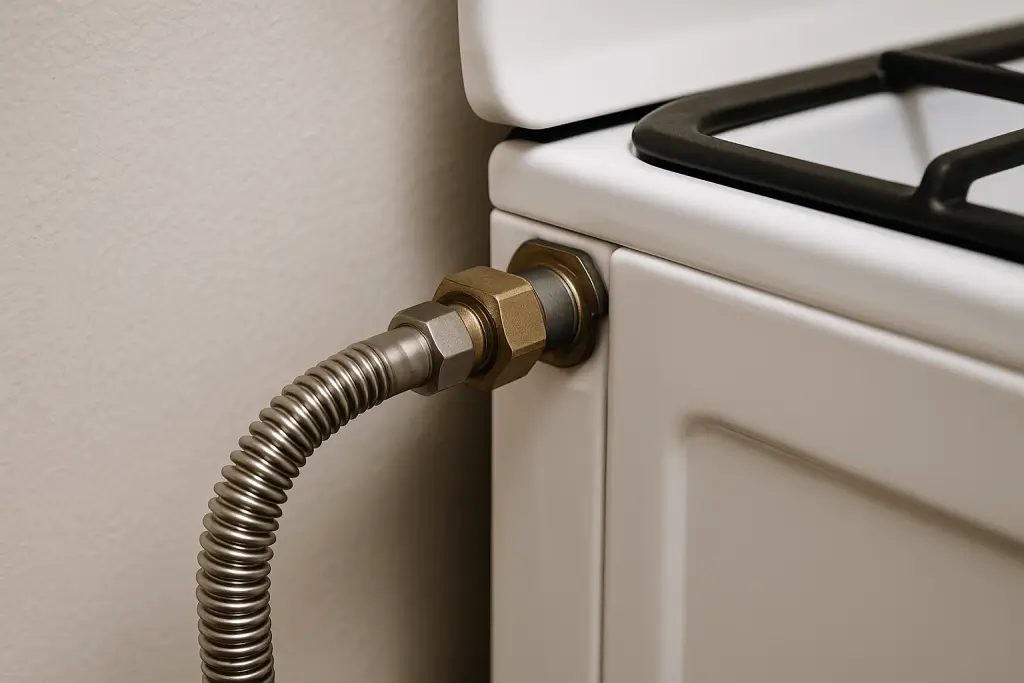
Home/Everyday Life The dangerous thing in your kitchen you forgot to replace (gas hose edition) by cms@editor May 4, 2026 written by cms@editor You check your smoke alarm. You have a fire extinguisher. But when did you last look at the rubber hose connecting your gas stove or oven to the wall? Most Australians never do. And that’s a problem. Gas hoses degrade over time. Cracks develop. Leaks happen. And a gas leak is not just a smell — it’s an explosion risk and a carbon monoxide hazard. The five‑year rule Gas hose manufacturers and Energy Safe Victoria recommend replacing rubber gas hoses every five years. Not “when they look worn”. Even if the hose looks fine externally, the inner rubber dries out and cracks. After five years, the risk of a leak increases eightfold. Yet a survey by Choice Australia found that 67% of households had gas hoses older than 10 years. Some were 20+ years old. How to check your hose Go to your kitchen. Follow the metal pipe from the wall to your stove. You’ll see a rubber or braided hose, typically 1–2 metres long. Look for: Cracks or perishing (dry, flaky rubber). Bulges or soft spots. Discoloration near the ends. Pages: 1 2
Home/Everyday Life How to remove any smell from laundry (even if you forgot it in the machine for two days) by cms@editor May 4, 2026 written by cms@editor You ran a load of washing. Then you forgot about it. Two days later, you open the machine and a sour, mildewy smell hits your face. You wash it again. The smell remains. Don’t throw the clothes away. That stink comes from bacteria and mould that ordinary detergent can’t kill. Here’s the fix. The one‑wash rescue method Rewash the smelly load with white vinegar instead of fabric softener. Pour one cup of white vinegar (the cheap cooking kind, $2 from Coles) into the softener dispenser or directly into the drum. Wash on the hottest setting the fabric can handle (40°C for delicates, 60°C for towels and sheets). Vinegar kills bacteria and neutralises alkaline odours. It also removes detergent residue that traps stink. If that doesn’t work: baking soda plus vinegar Run a second cycle. Add half a cup of baking soda to the drum with your regular detergent. Put one cup of vinegar in the softener slot. The combination fizzes inside the machine, deep‑cleaning fibres. This works for sweat‑stained gym clothes, musty towels, and even smoke smells. Pages: 1 2
Home/Everyday Life 10 things in your house you should throw out today (declutter without regret) by cms@editor May 4, 2026 written by cms@editor Your home is not a museum for broken things. Yet most Australians keep items they haven’t touched in years. Clutter creates stress — studies show that visual chaos raises cortisol levels. Here’s a ruthless but freeing list. If an item fits any category, bin it, donate it, or recycle it today. 1. Expired spices and herbs. Those dusty jars from 2019 have no flavour. Old spices won’t make you sick, but they add nothing to food. Replace every two years. 2. Freezer-burned meat. If you can’t identify the grey lump or it has ice crystals, it’s garbage. Your freezer is not a time machine. 3. Single socks with no mate. The missing sock is not coming back. Keep a small box for “orphans” for one month, then discard. 4. Old phone chargers and cables. Micro‑USB, Nokia, weird printer cables — you will never use them again. E‑waste recycling at Officeworks is free. 5. Plastic containers without lids. Or lids without containers. They multiply like rabbits and occupy precious cupboard space. Recycle the unmatched pieces. 6. Perfumes and lotions you hate. That gift set from three Christmases ago. You won’t suddenly like the scent. Donate unopened ones to a women’s shelter. Pages: 1 2
Home/Everyday Life How to get rid of ants forever (no chemicals, 5‑minute fix) by cms@editor May 4, 2026 written by cms@editor Ants invade Australian kitchens like clockwork, especially after rain. You wipe the bench, they come back. You spray poison, they find another path. The problem isn’t the ants you see — it’s the invisible chemical trail they leave for their nest mates. Break the trail, and you break the invasion. And you don’t need toxic sprays. The 5‑minute solution Mix equal parts white vinegar and water in a spray bottle. Add 10 drops of tea tree or peppermint oil (ants hate strong smells). Spray every surface where ants walk: bench edges, around the sink, along skirting boards. Wipe with a damp cloth. The vinegar erases the pheromone trail. The oil repels new scouts. Do this once a day for three days, then once a week. Pages: 1 2
Work/Finances The one financial habit that separates rich Australians from everyone else by cms@editor May 4, 2026 written by cms@editor Walk into any bank in Australia. Look at the customers. Some have 50,000 insavings. Some have 50,000 insavings. Some have500. Some are in debt. What separates them? It’s not income. Plenty of high‑income earners live pay‑to‑pay. It’s not luck. Many wealthy people started with nothing. The single biggest difference, according to decades of financial behaviour research, is a quiet, almost boring habit called “pay yourself first.” This is not a get‑rich‑quick scheme. There is no hype. But it works more reliably than any investment strategy, any side hustle, any lottery ticket. And most Australians don’t do it. Here’s what “pay yourself first” means: Before you pay a single bill, before you buy groceries, before you go out for dinner, you automatically move a fixed percentage of your income into a savings or investment account. You treat that transfer like a non‑negotiable tax. The money is gone before you can spend it. The wealthy do this without thinking. The average person pays everyone else first — the landlord, the bank, the utility company, the restaurant — and saves whatever is left at the end of the month. Usually, nothing is left. The numbers are stark. A 2023 survey by ME Bank found that 42% of Australians have less than 1,000insavings.Another281,000insavings.Another2865,000 per year. Where does it go? Small, invisible leaks. A coffee here. A takeaway there. An extra streaming service. A pair of shoes on sale. None of these feel like big decisions, but they add up to thousands per year. “Pay yourself first” plugs those leaks by making saving automatic. How to set it up in 15 minutes You don’t need willpower. You need a bank account with an automatic transfer feature (every Australian bank has this). Step 1. Open a separate high‑interest savings account that is not linked to your everyday transaction card. Bonus points if it has no ATM access. The harder it is to withdraw money, the better. Step 2. Set up an automatic transfer from your main account (where your salary lands) to this savings account. Schedule it for the day after payday. Pages: 1 2
Work/Finances Time management for lazy people: the 25‑minute method that actually works by cms@editor May 4, 2026 written by cms@editor You have a deadline. You sit at your desk. You open your laptop. Then you check your phone. Then you get coffee. Then you reorganise your pens. Then you read the same news article twice. Two hours pass. You’ve done nothing. You feel guilty, but the guilt doesn’t make you work — it makes you avoid work even more. This is not laziness in the moral sense. It’s overwhelm. Your brain looks at the mountain of tasks and freezes. The only solution is not more discipline or more caffeine. It’s a psychological trick called interval timing — breaking work into such small chunks that your brain doesn’t have time to resist. The most famous version is the Pomodoro Technique, named after a tomato‑shaped kitchen timer. And it works even for the laziest person in the office. Here’s the method in one sentence: Work for 25 minutes. Rest for 5 minutes. Repeat four times. Then take a longer break (15–30 minutes). That’s it. No complicated systems. No apps required (though many exist). The magic is in the numbers. 25 minutes is short enough that you can convince yourself to start. “Anyone can do 25 minutes,” says productivity coach James Holloway from Sydney. “Even on your worst day, you can suffer through 25 minutes. And once you start, momentum carries you.” The 5‑minute break is short enough that you don’t lose focus, but long enough to stretch, drink water, or scroll your phone guilt‑free. Why 25 minutes works when “work all day” fails The Pomodoro Technique works for three psychological reasons. Reason 1. It defeats the starting problem. The hardest part of any task is the first five minutes. Your brain generates resistance. But 25 minutes feels trivial. You tell yourself: “I’ll just do one tomato.” By the time the 25 minutes ends, you’ve often built enough momentum to continue. Reason 2. It creates artificial urgency. When you know a timer is counting down, you work faster. Parkinson’s Law says: work expands to fill the time available. If you give yourself 8 hours to write a report, it takes 8 hours. If you give yourself 25 minutes, you find a way. Reason 3. It prevents burnout. Constant work without breaks leads to diminishing returns after 90 minutes. The 5‑minute breaks reset your attention span. People who use Pomodoro report being more productive in 4 hours than they used to be in 8 hours of unfocused, guilty work. Pages: 1 2 3
Work/Finances How to resign politely without burning bridges (a step‑by‑step guide) by cms@editor May 4, 2026 written by cms@editor You’ve decided to leave your job. Maybe you found something better. Maybe you’re burnt out. Maybe your boss is impossible. Whatever the reason, the act of resigning feels terrifying. Your heart races. Your palms sweat. You imagine your boss exploding, guilt‑tripping you, or making your last weeks miserable. So many people do one of two bad things: they resign via email (cowardly and unprofessional), or they unload every grievance they’ve ever had in a burning‑bridges exit speech (satisfying for ten minutes, damaging for years). Neither serves you. In Australia, the world is smaller than you think. Industry gossip travels fast. That boss you insulted today could be the hiring manager at your dream company five years from now. Resignation is not just an ending — it’s the last impression you leave. And done correctly, it can open doors for the rest of your career. Career coach Rachel Donovan from Brisbane, who has advised over 500 professionals on job transitions, says: “The perfect resignation is boring. No drama. No revenge. No tears. You give notice professionally, you work your notice period diligently, and you leave people thinking ‘They were a class act.’ That reputation follows you forever.” Based on her advice and Australian workplace law, here is a step‑by‑step guide to resigning with grace. Step 1. Check your contract for notice period Most Australian full‑time employees have a notice period of two to four weeks. Some senior roles require six to eight weeks. If you don’t give the required notice, the employer can deduct pay or even sue for breach of contract (rare but possible). Also check if you have any post‑employment restrictions — non‑compete clauses or non‑solicitation clauses. These are often unenforceable unless you’re a director or have access to trade secrets, but better to know. Step 2. Prepare a simple resignation letter (no drama) Your letter needs only three things: Your name and date. A clear statement: “Please accept this letter as formal notice of my resignation from the position of [job title].” Your last day of work (calculated from today’s date plus your notice period). A simple thanks: “I have enjoyed my time at [company] and appreciate the opportunities.” That’s it. Do not list reasons for leaving. Do not complain. Do not say “I’m leaving because my manager is toxic” — even if it’s true. That letter becomes part of your employment file and can be read by future reference checkers. Keep it short and sweet. Pages: 1 2 3
Work/Finances Why freelancers in Australia earn more than office workers (top niches listed) by cms@editor May 4, 2026 written by cms@editor The nine‑to‑five office job used to be the gold standard of stability. But something has shifted. Across Australia, freelancers — independent contractors who work from home, coffee shops, or co‑working spaces — are quietly out‑earning their office‑bound counterparts. Not by a small margin. According to the 2024 Freelance Australia Report, the median hourly rate for freelancers is 87 per hour, compared to 87 per hour, compared to 54 per hour for permanent employees in equivalent roles. That’s a 61% premium. And the top 20% of freelancers earn over 150 per hour, translating to 150 per hour, translating to 200,000–300,000 per year for those working full‑time. Meanwhile, many office workers are stuck with 2–3% annual raises that don’t even match inflation. “The myth is that freelancing is risky and low‑paid,” says Emma Watson, a career coach and former tech recruiter from Sydney who now runs a freelance community of 12,000 members. “The reality is: companies are desperate for specialised skills, but they don’t want to pay superannuation, sick leave, holiday pay, or redundancy. So they happily pay higher hourly rates to freelancers. The freelancer wins on cash flow. The company wins on flexibility. It’s a win‑win — but only if you pick the right niche.” The key word is niche. Generalist freelancers — “I’ll do anything” — struggle to charge more than 40‑50perhour.Specialists who solve expensive problems for businesses can charge 40‑50 per hour. Specialists who solve expensive problems for businesses can charge150‑300 per hour. Watson has identified seven niches where Australian freelancers are currently earning double or triple the average office salary. These are not hard to enter, but they do require training and a portfolio. Top freelance niches in Australia (2024–2025) 1. Technical writing (API documentation, SOPs, compliance) – Software companies need clear manuals for their products. They pay $100–180 per hour because bad documentation costs them support calls and lost customers. You don’t need to be a programmer — just logical and clear. Entry path: Google’s free “Technical Writing for Developers” course. Build a sample portfolio (rewrite a confusing manual for a free app). Pitch to startups. Pages: 1 2
Work/Finances How to ask for a pay rise without fear: a 3‑minute script by cms@editor May 4, 2026 written by cms@editor You’ve been working hard. Taking on extra tasks. Staying late. Delivering results. But when it comes to asking for more money, your throat closes up. You imagine your boss laughing, saying no, or worse — revealing that you’re actually overpaid. So you stay silent. Another year goes by. Inflation eats your salary. And you resent yourself for not speaking up. This is incredibly common. A 2023 survey by the Australian HR Institute found that 62% of employees have never asked for a raise, and among those who have, nearly half waited more than two years to do so. The number one reason? Fear of rejection. But here’s the truth that career coach Michael Tran from Melbourne (who has coached over 1,000 professionals) wants you to know: most bosses expect you to ask, and a well‑prepared request is rarely refused outright. Even if they can’t give you the full amount, the conversation itself puts you on the radar for future increases. Silence, on the other hand, guarantees nothing. Tran has developed a simple, three‑minute script that removes the emotional drama. It’s based on psychology: bosses respond to data, not feelings. If you walk in crying about rent or loyalty, you’ll get sympathy but not a cheque. If you walk in with numbers showing what you’ve saved or earned the company, you’ll get respect — and often a raise. The 3‑minute script (memorise it) Minute 1: State your value in one sentence. “Over the past [time period], I’ve [specific achievement with numbers].” Example: “Over the past six months, I’ve increased our social media engagement by 40% and brought in three new clients worth $15,000 per month.” Pages: 1 2 3